
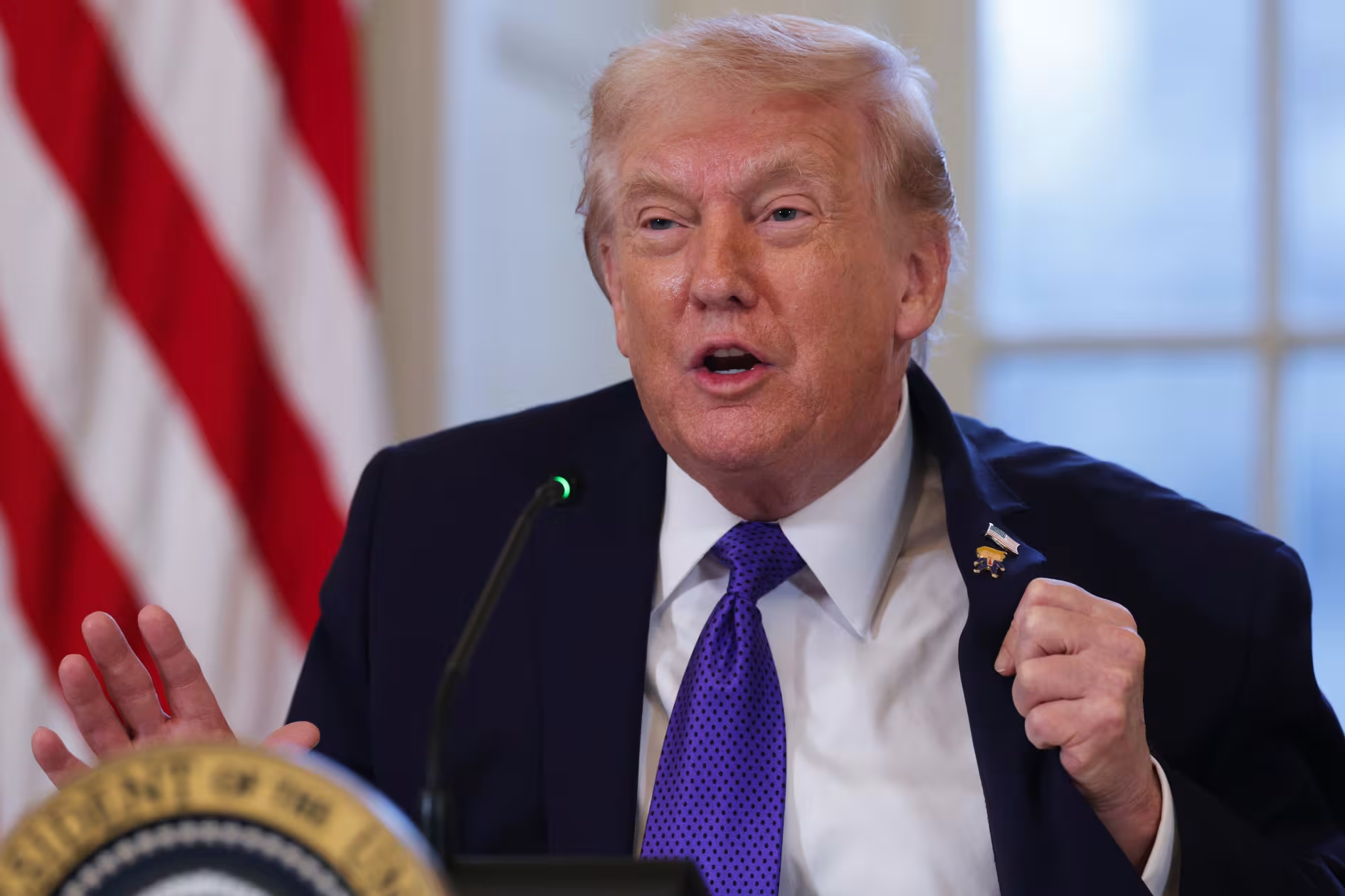
In a social media post on Friday, President Donald Trump announced that he would set a 10% maximum on credit card interest rates for the upcoming year.
In a social media post on Friday night, President Donald Trump stated that he will cap credit card interest rates at 10% for a year, fulfilling a campaign pledge to lower the cost of carrying credit card debt for Americans.
According to SoFi, credit card interest rates can range from 17.69% for a person with “excellent” credit to 35.99% for a person with “poor” credit.
“We will no longer let the American Public be ‘ripped off’ by Credit Card Companies that are charging interest rates of 20 to 30% and even more,” Trump wrote on Truth Social. According to him, the cap will take effect on January 20.
The president did not specify how the interest rate reduction would take place, and legislation may need to be passed by Congress. Whether he would try to impose this adjustment on financial firms was unknown.
Trump’s action is the most recent effort to allay Americans’ worries about affordability as household prices for everything from vehicles to heating bills to insurance premiums continue to rise. Earlier this week he stated he was seeking to prevent “large institutional investors” from buying single-family houses, calling the move as one that would solve soaring housing costs. Simultaneously, a provision that would have prevented medical debt from showing up on people’s credit records has been taken back by the Trump administration.
Over the past few years, carrying credit card debt has gotten more and more costly. The average APR, or annual percentage rate, on a new credit card is 23.79%, according to LendingTree (TREE).
The borrower advocacy group Protect Borrowers said in a blog post this week that “Americans paid more than $160 billion in credit-card interest charges in 2024 – a 50% jump since 2022,” referencing a recent Consumer Financial Protection Bureau report.
According to figures from the Federal Reserve Bank of New York, as of the end of the third quarter of 2025, Americans owed $1.23 trillion on their credit cards overall, an increase of $24 billion over the previous quarter. According to LendingTree, the average credit card debt for those with outstanding accounts was $7,886 in the third quarter.
Trump is hardly the first politician to advocate for a credit card interest rate cap. In 2025, Sen. Josh Hawley of Missouri and Sen. Bernie Sanders of Vermont proposed a bill that would limit credit card interest rates to 10% for five years. Hawley, a Republican, described card issuers’ interest rates as “exploitative,” while Sanders, an independent who caucuses with Democrats, likened them to “extortion and loan sharking.”
According to the Consumer Bankers Association, Sanders and Hawley’s plan would backfire and make it impossible for Americans to get credit. In 2025, the trade group told BourseWatch, “Price-setting is political pandering that has, time and time again, proven to harm Americans.” “These socialist-type pricing policies are the best way to drive up costs for consumers and push access to credit further out of reach for millions of consumers.”
Bill Ackman, the high-profile billionaire hedge-fund manager, responded to Trump’s statement, calling it “a mistake.” Customers would “turn to loan sharks for credit at rates [higher] than and on terms inferior to what they previously paid,” he claimed, and the action would put pressure on credit card firms to terminate millions of credit card accounts.
According to a study it carried out with the Missouri Bankers Association, the Electronic Payments Coalition, a trade group representing the payments sector, concluded that a 10% interest rate cap would result in the loss of credit access for up to 88% of open credit card accounts, “including nearly every account associated with a credit score below 740.”
“Respected economists have reiterated this warning and emphasized these caps might sound promising, but are bad policy and create unintended consequences,” Executive Chairman Richard Hunt said in a statement released on Friday.
LendingTree Chief Consumer Finance Analyst Matt Schulz told BourseWatch on Friday that “it is also clear that most Americans are willing to accept both of those consequences if it means capping interest rates,” despite the possibility of “a dramatic reduction in credit-card rewards” and restricted access to loans.
A survey conducted by LendingTree in 2024 found “that two-thirds of cardholders support a credit-card rate cap, even if it means reduced rewards, and in six in 10 support it even if it means restricted access to credit for many,” he stated.



