
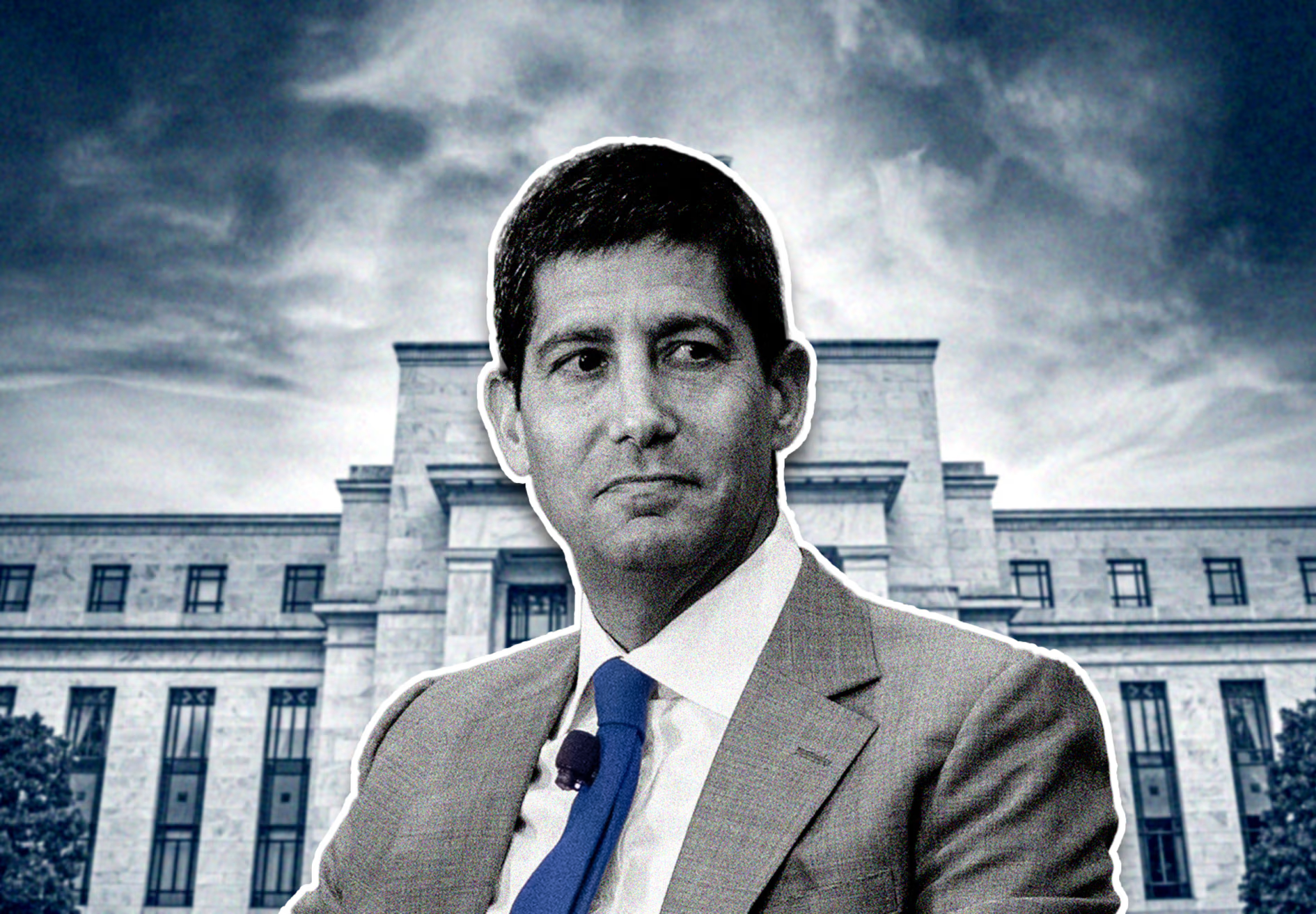
Kevin Warsh, a former Federal Reserve governor, sits second from left as he takes part in a panel discussion in 2024 in Washington, D.C.
President Donald Trump has nominated former Federal Reserve governor Kevin Warsh to serve as the next chair of the Fed, putting a well-known opponent of the U.S. central bank in its top role.
Trump made the news in a Truth Social post at 6:48 a.m. Eastern.
When Warsh joined the bank’s board of governors in 2006, he became the youngest Fed governor in history. During the 2008 global financial crisis, he was part of Fed Chair Ben Bernanke’s inner circle.
Warsh had been a senior economic-policy adviser to President George W. Bush, and Bernanke wanted to keep lines of communication open with the Bush administration in the early days of the financial crisis, so he embraced him.
Warsh eventually broke with Bernanke and resigned from his position in 2011, agreeing with Republican critics who claimed that the Fed chair’s unprecedented bond-buying program—known as quantitative easing—gave the central bank too much control over financial markets in order to keep long-term rates low after the crisis.
Since then, Warsh has continued to criticize the Fed’s balance sheet.Derek Tang, co-founder of LHMeyer/Monetary Policy Analytics, said that many of the conflicts Warsh is engaged in appear to have been fought twenty years ago. “How Warsh will adjust to the modern world is a big question,” Tang said.
Since 2008, the Fed has accepted Bernanke’s concept that the central bank should pay interest on excess bank reserves, allowing the Fed to retain a large balance sheet that may be utilized to calm markets during emergencies. Warsh has advocated going back to a time when banks borrowed money from one another in times of need and the Fed had a tiny balance sheet.
Last April, after it became clear Warsh would be a candidate to replace Fed chair Jerome Powell, Warsh gave a stinging speech about other faults of the Fed, saying the central bank talks too much, gets too involved in social issues of the day and allowed Congress off the hook for excessive fiscal spending.
Treasury Secretary Scott Bessent has reiterated these issues in his public remarks. “The real question concerning Warsh is about going ahead. What does he think the Fed should be doing at this time? I don’t think we have an answer on it,” Tang remarked.
The central bank should not have aggressively lowered its benchmark interest rate by half a percentage point in September 2024, according to Warsh’s argument. He has also claimed that the Fed lacks a sound plan for dealing with inflation.
Trump himself has thrown multiple broadsides at Powell, whom Trump appointed for the post early in his first White House term, while simultaneously asking for the central bank to decrease interest rates.
Most recently, the Trump administration’s Department of Justice has targeted Powell in a criminal investigation over whether he lied to Congress about cost overruns for the restoration of the Fed’s headquarters. This event is thought to have the potential to delay the Senate’s confirmation of Trump’s central bank chair choice.
Even after three Fed interest-rate cuts in 2025, Trump has continued to openly voice his conviction that rates should be “a lot” lower and to imply that rates should not be raised in a manner that slows stock-market rises.
Warsh is married to billionaire Estée Lauder (EL) heiress Jane Lauder. Since leaving the Fed in 2011, Warsh’s work has included working as a lecturer at Stanford University’s business school and as a visiting fellow at the university’s Hoover Institution, a conservative-leaning think tank. He is a partner in billionaire investor Stanley Druckenmiller’s investment firm. He also has been on the board of directors for the shipping corporation UPS (UPS).
Economists think that, having been appointed by Trump, it is a guarantee that Warsh will fight for rate decreases in 2026. However, it is yet uncertain if he would be able to persuade his new central bank colleagues to support easing.
The market “could be a little jumpy,” which would result in higher borrowing costs for people looking for mortgages and other consumer loans, and Warsh’s “paper trail” over the last year is a little difficult to interpret, according to Tang.
When the Fed rate reduction are executed, borrowing rates tend to decline across the board for consumers.



