
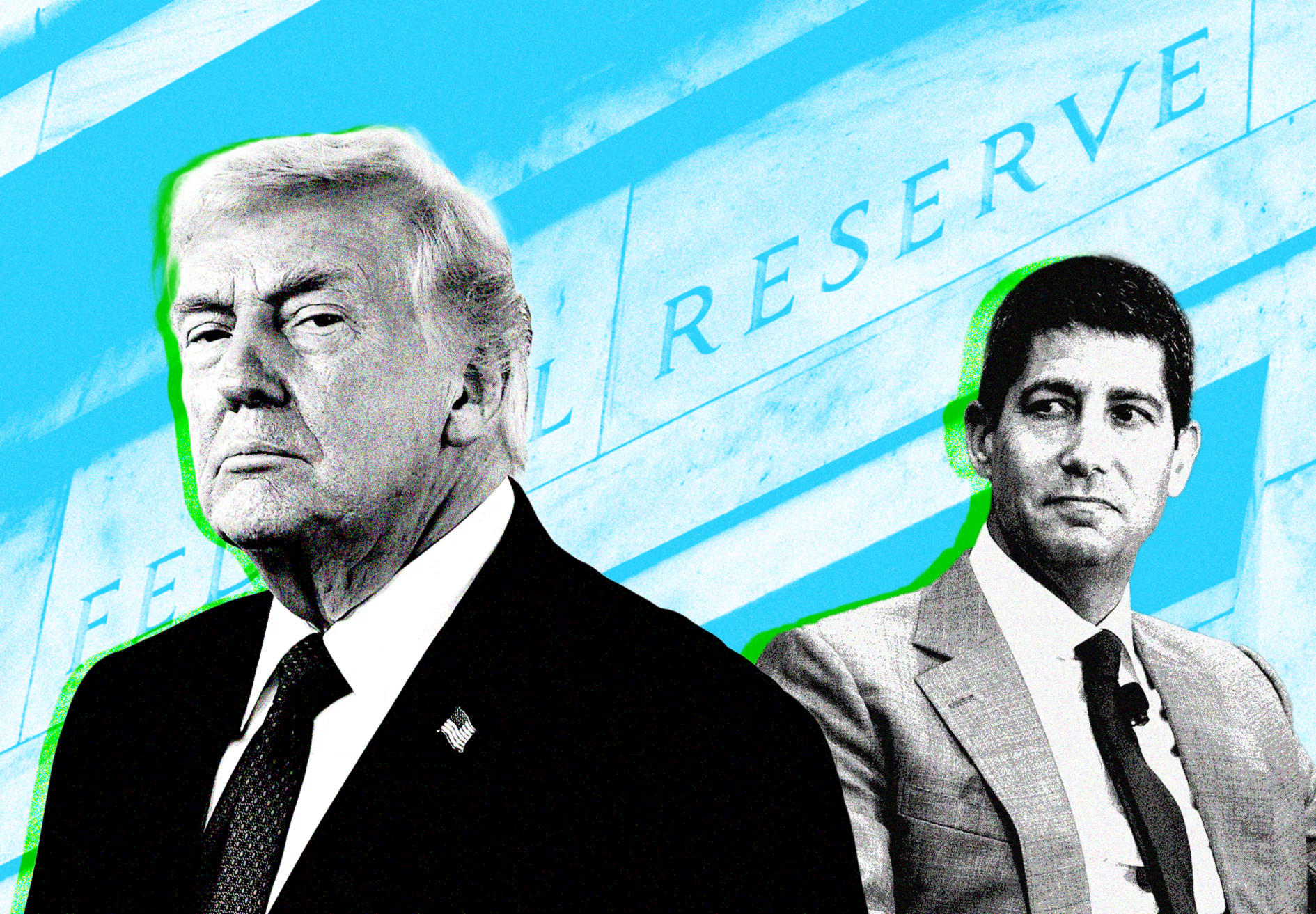
Kevin Warsh, a former governor of the Federal Reserve, is President Donald Trump’s choice to lead the central bank going forward.
Traders in the roughly $30 trillion Treasury market were examining President Donald Trump’s candidate to be the next leader of the Federal Reserve and arriving to the conclusion that they aren’t going to end up getting all they want.
On Friday, the bond market was trading in a manner that signaled there were some worries over Trump’s selection of former Fed governor Kevin Warsh to succeed Jerome Powell, whose term as Fed chair ends in May. Long-dated Treasury yields rose slightly higher, while shorter-term rates declined – providing a larger difference between the two, known as a steeper curve. In particular, the risk is that Warsh, if authorized by Congress, would advocate for larger interest-rate reduction than are now envisaged, which could wind up producing inflation concerns in the long run. “Nominating Warsh avoids a lot of the worst-case scenarios, but it’s still unknown what influence he will have on rates,” said strategist Will Compernolle of FHN Financial in Chicago. For now, the bond market is telegraphing that “the Fed’s current interest-rate trajectory under Fed Chair Jerome Powell is the correct way to manage risks.” Fed policymakers have penciled in just one quarter-point rate decrease for 2026, but fed-funds futures traders largely predict two reductions by year-end.
The 10-year BX:TMUBMUSD10Y and 30-year Treasury yields BX:TMUBMUSD30Y inched up by less than 2 basis points each to 4.24% and 4.87%, respectively, on Friday, according to the strategist, because Warsh may push for more cuts than anticipated and a reduction in the size of the Fed’s balance sheet if he stays closer to Trump’s preferred position on interest rates. The rate on the long bond occasionally reached 4.9%, before settling below that level as of 3 p.m. Eastern time.
Meanwhile, the 5-year breakeven inflation rate, a barometer of average projected inflation over the next five years, held slightly above 2.5% on Friday, showing mounting worries about sustained upside risks to inflation. According to FactSet, the rate was as low as 2.28% at the beginning of the year. Market participants had been so frightened about Trump appointing someone who was going to “trash the institution” that the selection of Warsh is considered as “still within the margin of reasonableness,” Compernolle said in a phone interview. The risk now is that Warsh would support softer monetary policy at the expense of longer-term inflation, Compernolle added.
Warsh, a former governor of the Federal Reserve, left the organization in 2011 soon after then-Chair Ben Bernanke started a second round of bond purchases. His departure earned him a reputation as someone who was a bit more assertive than his colleagues in limiting the Fed’s footprint in markets through the use of its balance sheet. He has more recently spoken in favor of lower rates and a smaller Fed balance sheet. Warsh told Fox News last year that Trump is correct to be upset with the Fed’s policy under Powell. “Warsh’s opinions are going to shift with time,” said Derek Tang, an economist at Monetary Policy Analytics, a research and consultancy business co-founded by former Fed governor Larry Meyer. Tang went on to say that his previous opinions are “not a good guide of what he could do as Fed chair.”According to Tang in a phone interview, Warsh “has a big job on his hands in getting everyone to see his views,” which may be at odds with what the other members of the rate-setting Federal Open Market Committee desire because the Fed chair is just one person. nevertheless, “it’s quite possible he might get one or two rate more cuts through than what’s expected, so we could see four cuts in total by the end of year depending on how things go.”



