
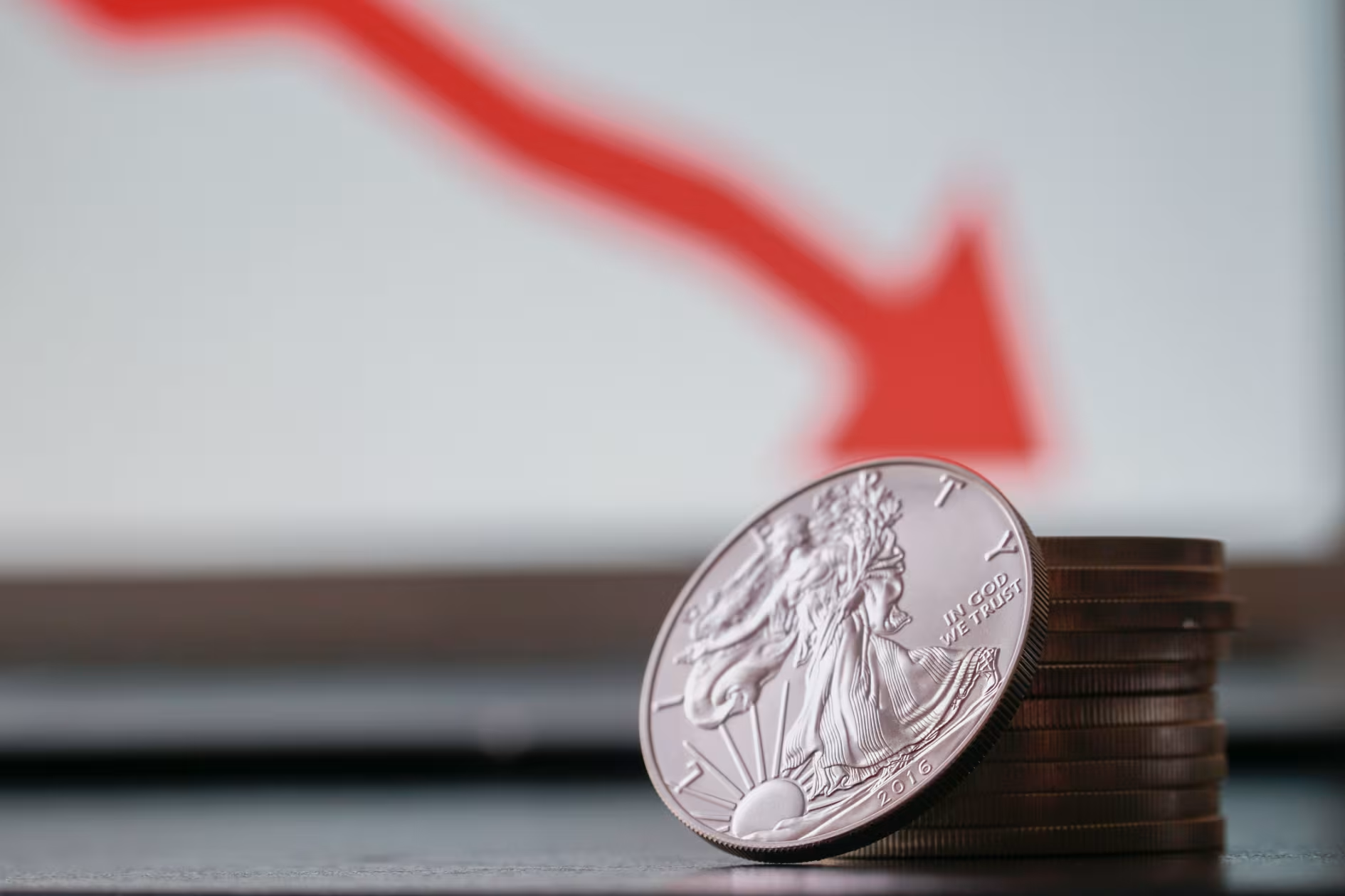
Silver futures fell considerably below $100 an ounce on Jan. 30.
Silver’s slide on Friday was the metal’s worst daily decrease since 1980 and was described by one strategist as “every man and his dog rushing for the exit.”
The U.S. dollar DXY recovered after President Donald Trump nominated Kevin Warsh to be the next head of the Federal Reserve. According to some analysts, Warsh would be less in favor of lower interest rates than other possible candidates. That caused traders of precious metals to sell, although it might only be a hiccup in the silver surge.
To some, Friday’s move came as no surprise. “It’s been evident for a while that the metals market was extremely frothy, but earlier this week there were indications that things were getting completely out of control,” said Michael Brown, senior research strategist at Pepperstone.
“Clearly, incredibly crowded on the long side, while volatility had increased to, frankly, preposterous levels,” he stated in his market analysis on Friday on the gold (GC00) and silver markets. He pointed out that “it doesn’t take much to trigger moves” like those observed on Friday in a market when trading volumes are so high and “leveraged longs”—traders borrowing money to purchase additional assets—are so stretched.In other words, everyone is racing to get out at the same moment, driving down prices, which leads to more forced sales.’Michael Brown, Pepperstone “According to Brown, “every man and his dog [is] rushing for the exit at the same time, forcing price lower, which in turn begets further forced selling,” which is a helpful reminder that “momentum works both ways!”
The most active March silver contract (SIH26) (SI00) closed at $78.53 per ounce on Friday, down 31% from Comex. It registered its largest one-day percentage fall since March 27, 1980, according to Dow Jones Market Data.
Silver prices recently settled at a record high on Monday of $115.504 and were still up by just over 11% for the month. The silver-backed iShares Silver Trust SLV was down 27% Friday, on course for the worst daily drop based on records dating back to 2006, although it was still up by about 19% for the month.
Gold for April delivery (GCJ26) fell 11% to trade at $4,745.10 an ounce after ending Thursday at a record-high $5,354.80. It was nevertheless up roughly 9% for the month, making for its best month since September.
The Warsh effect on metals
Warsh, Trump’s nominee to head the Fed, is a well-known critic of the U.S. central bank and has also been scathing of loose money. He’s been more aligned with a policy posture that’s focused on reducing inflation, which might imply hiking interest rates.
Read: Here’s how Warsh’s Senate confirmation is likely to go as a key Republican attempts to prevent it
Higher interest rates might boost the dollar and diminish demand for dollar-denominated commodities. “The news of Trump’s Fed chair nomination, Warsh, is said to be part of the trigger for today’s ‘WArSH’ out in precious-metals prices,” according to Peter Spina, president and founder of the investment websites SilverSeek.com and GoldSeek.com.
But the market has already witnessed some substantial percentage-term price corrections on this “very aggressive price run higher,” he said. This is not likely to be any different, he said.
Silver prices “could get flushed out lower below $100 an ounce before returning back above the century mark,” Spina warned.
There are still several advantages to the white metal. According to Nate Miller, vice president of product development at Amplify ETFs, which offers the Amplify Junior Silver Miners exchange-traded fund SILJ, it is experiencing a global supply shortage while benefiting from safe-haven and store-of-value flows, which are comparable to those of gold. There’s also rising attention on silver as an important mineral, he said.
According to Miller, some silver consolidation following such a dramatic increase is “healthy and consistent with how commodity markets typically behave following rapid price appreciation,” adding that volatility now seems to be well within reason.
While it’s true that the surge has definitely gone too far, too fast, it’s not too late for investors to buy the metal, said Peter Grant, vice president and senior metals strategist at Zaner Metals.
Dips below $100 indicate a “opportunity,” particularly around the 20-day moving average of approximately $93, Grant added. Prices on Friday ended significantly below that level.
however “you have to be able to withstand the volatility, which is likely to remain high,” Grant stated.



