
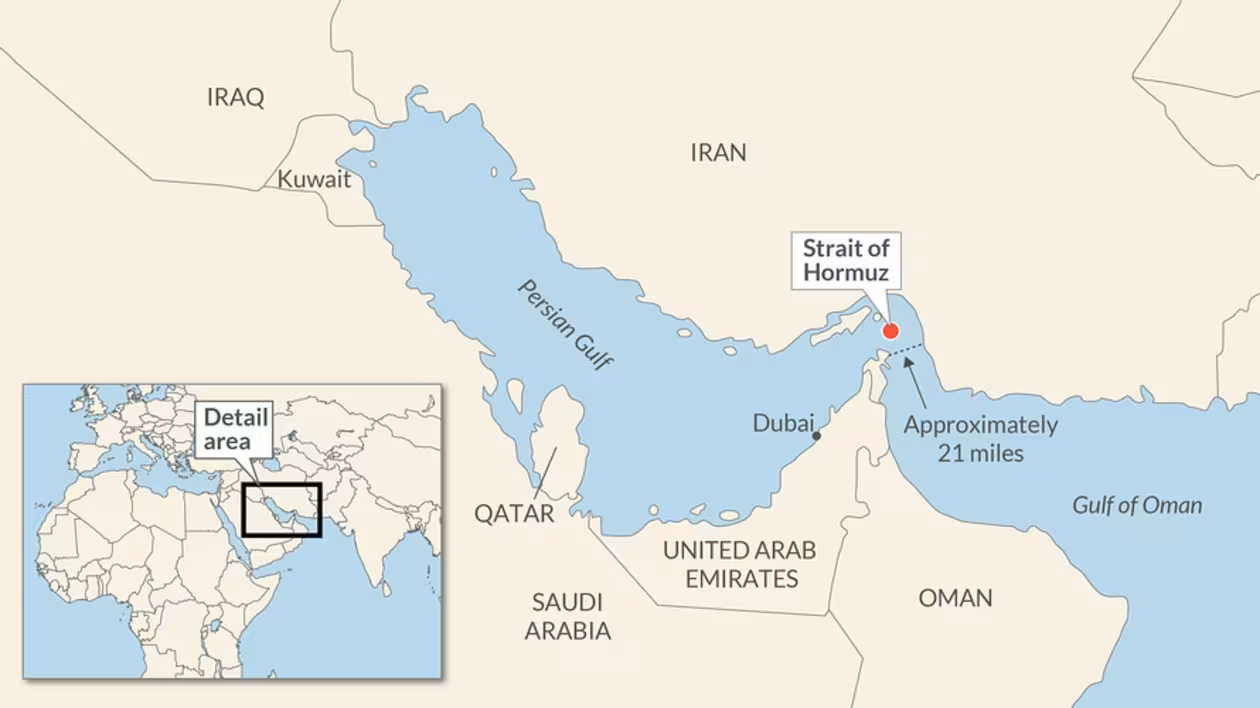
A vital chokepoint for the world’s crude oil supplies is the Strait of Hormuz.
Analysts predict that unless the confrontation lasts for months and drastically boosts the price of oil, the U.S. attack on Iran won’t significantly hurt the economy or increase U.S. inflation.
Following President Trump’s Operation Epic Fury, the price of oil surged over the weekend, and U.S. markets first experienced a steep decline in Monday morning trade. However, later in the day, equities DJIA SPX COMP largely recovered, and oil prices (CL00) (BRN00) somewhat decreased.
Iran closing the vital Strait of Hormuz, a narrow body of water that crosses the country’s southern coast, was the main concern. On cargo ships, one-fifth of the world’s natural gas and oil travel across the strait.
Shippers have halted operations for the time being after Iran threatened to use its military to seal the strait and several tankers were targeted. The United States has indicated that it will not permit Iran to control the strait and has claimed to have already sunk several Iranian ships.
“A complete closure of the Strait of Hormuz is unlikely, but a partial reduction in [oil] supply is likely in store over the next couple weeks and months, which will leave these prices higher,” stated Matthew Martin, senior U.S. economist at Oxford Economics. However, even a temporary or partial closure could result in higher oil and gasoline prices in the near future, with implications for the Federal Reserve.
Higher energy prices, according to economists, would only raise the rate of inflation in the United States by a few tenths, and only if they continued long after the first conflict ended. The cost of fertilizer may also increase.
According to Tom Porcelli, chief economist at Wells Fargo, “the impact on U.S. economic growth, inflation and monetary policy should remain modest, absent a prolonged war and major long-term disruptions to key shipping routes in the Strait of Hormuz.” Similarly, they estimate that the conflict would only reduce the GDP by a few tenths.
A recent example is the 12-day battle between Israel and Iran in June 2025. After Israel destroyed Iranian nuclear facilities, oil prices surged and momentarily reached $82 per barrel, but a few months later, they dropped to less than $70. The world economy and the US economy seldom paid any attention.
In a research note to clients, Glenmede investment strategists Jason D. Pride and Michael Reynolds noted that most international conflicts have minimal long-term effects on markets and the economy. “History is littered with numerous meaningful events that were seen as near cataclysmic at the time,” they wrote.
According to experts, the Fed would likely consider a modest rise in inflation linked to rising energy prices to be a transitory situation.
However, even a slight increase in inflation might discourage the central bank from lowering interest rates in the near future. The majority of investors anticipated a rate drop by July prior to the Iranian dispute.
According to the CME FedWatch tool, the odds on Monday still supported the next rate decrease in July, although investors became more skeptics following the strike on Iran.
“The Fed isn’t going to be in any rush to cut rates,” stated DWS’s head of fixed income, Americas, George Catrambone.
The good news is that rising oil costs are no longer a threat to the U.S. economy. For starters, the United States is once again the world’s largest producer of energy. The importance of oil in the economy has also decreased due to significant advancements in energy efficiency. “I can remember, as an adolescent in the 1970s, sitting in the back of the family car, waiting in long lines for gasoline, and can attest that we are just not as vulnerable to sharp increases in the price of oil and gasoline as we were then,” stated Joseph Brusuelas, chief economist at RSM.
According to Brusuelas, he will continue to predict strong U.S. economic growth of at least 3% in the first quarter.
According to economists, the impact on Americans with middle-class or lower-class incomes might pose the greatest threat to the economy if petrol prices increase by 10 to 20 cents over the coming months.
It would result in some softening of consumer spending and increase the financial burden on those households. Even still, the price of oil has only increased by a few dollars over the past year.



