
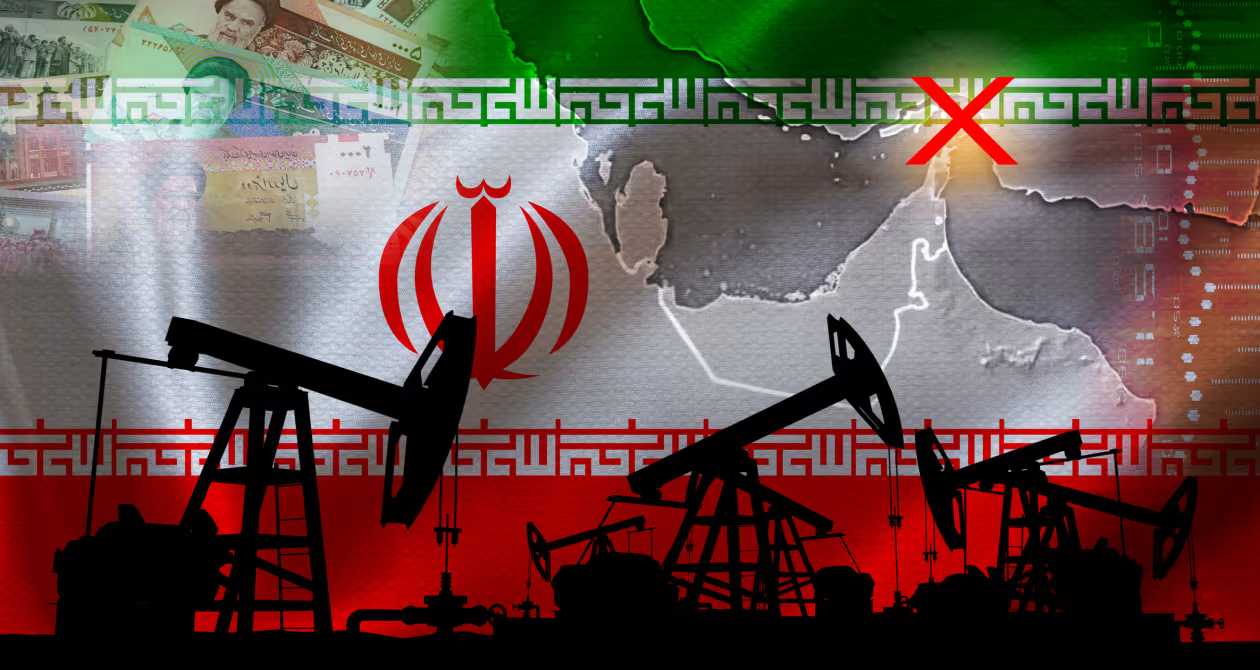
The Stock-Market Correction Isn’t Over Yet: Here’s Why the Iran Cease-Fire Is Actually a Bad Omen
The financial markets are often seen as barometers of global stability and confidence. When geopolitical tensions ease, such as with the recent cease-fire agreement between Iran and its regional adversaries, one might expect a positive reaction in the markets. However, the situation is far more nuanced. In this detailed analysis, we explore why the stock-market correction may not be over, and how the Iran cease-fire, paradoxically, could be a signal of more turbulence to come.
Understanding Stock-Market Corrections
Stock-market corrections, characterized by a decline of at least 10% from recent highs, are natural parts of market cycles. They allow markets to adjust, shake out speculative excess, and recalibrate to more sustainable levels. Yet, the current environment suggests that the recent correction might not have fully run its course. Several factors, including interest rates, inflation concerns, and geopolitical uncertainties, continue to weigh heavily on investor sentiment.
Historically, stock-market corrections have been influenced by a variety of factors. Economic indicators, corporate earnings reports, and geopolitical events all play crucial roles. In the current scenario, the geopolitical landscape, particularly involving Iran, is of significant concern.
The Geopolitical Landscape: Iran’s Cease-Fire in Context
Iran’s recent cease-fire with its regional adversaries might appear to be a step towards stability, but the underlying implications are more complex. The cease-fire, while temporarily reducing military tensions, does not address the underlying issues that have fueled conflict in the region. The agreement is more of a strategic pause than a resolution, leaving room for uncertainty and potential volatility.

Moreover, the cease-fire itself may be driven by economic necessity rather than genuine diplomatic progress. Iran’s economy has been under severe strain due to international sanctions and domestic mismanagement. The economic challenges facing Iran are profound, and the cease-fire could be a tactic to alleviate pressure rather than a true commitment to peace.
Market Reactions to Geopolitical Events
Financial markets are sensitive to geopolitical events, with investors often reacting quickly to news that could impact economic stability. In the case of the Iran cease-fire, initial market reactions might be positive, viewing it as a reduction in risk. However, seasoned investors understand that such events can be transient and may not lead to lasting stability.
The global oil markets, in particular, are closely watching the situation. Iran is a major oil producer, and any change in its geopolitical stance can have significant impacts on oil prices. A temporary cease-fire might lead to a short-term decrease in oil prices, but without a long-term resolution, the underlying risks remain. As oil markets continue to fluctuate, so too does the stability perceived in global markets.
Economic Implications of a Prolonged Correction
If the stock-market correction persists, the economic implications could be significant. Prolonged corrections can lead to reduced consumer confidence, decreasing spending, and slowing economic growth. Businesses might delay investments, and employment rates could suffer as companies become cautious in their hiring practices.
Inflation remains another critical concern. Central banks worldwide are grappling with how to manage monetary policy in the face of rising prices. A continued stock-market correction, coupled with inflationary pressures, could create a challenging environment for policymakers aiming to balance growth with price stability.
Investor Strategies in Uncertain Times
For investors, navigating these uncertain times requires a strategic approach. Diversification, risk management, and a long-term perspective are essential elements of a resilient investment strategy. While it may be tempting to react to short-term news, such as the Iran cease-fire, investors should focus on broader economic indicators and trends.

Investors might also consider alternative asset classes, such as commodities or real estate, which can provide hedges against volatility in the stock market. Understanding the stock market dynamics and maintaining a balanced portfolio can help mitigate risks associated with geopolitical uncertainties.
The Broader Implications for Global Markets
The implications of the Iran cease-fire extend beyond the region, impacting global markets. Tensions in the Middle East have historically affected global trade routes, energy supplies, and international diplomacy. A temporary easing of tensions might not resolve these broader issues, and markets will continue to be wary of potential disruptions.
Additionally, other geopolitical factors, such as the ongoing trade disputes and the changing dynamics of international alliances, will influence market behavior. Investors and policymakers alike must remain vigilant and adaptable in the face of evolving global scenarios.
Conclusion: Cautious Optimism Amid Uncertainty
While the Iran cease-fire might initially seem like positive news, it is essential to approach the situation with cautious optimism. The underlying geopolitical complexities, coupled with ongoing economic uncertainties, suggest that the stock-market correction may not be over yet. By understanding the nuances of the current environment and adopting strategic investment approaches, investors can better navigate the challenges ahead.
Ultimately, maintaining awareness of global events and their potential impacts on financial markets is crucial. As the world continues to grapple with uncertainty, staying informed and prepared will be key to achieving long-term financial success.
Managing Risks in a Volatile Market
One of the most crucial aspects of investing during uncertain times is effective risk management. Investors must carefully assess their portfolios, ensuring they are diversified enough to withstand market fluctuations. This involves not only spreading investments across different sectors but also considering geographical diversification to mitigate risks associated with regional conflicts, such as those involving Iran.

Utilizing stop-loss orders and setting clear investment thresholds can help limit potential losses during market downturns. Additionally, investors should consider increasing their exposure to defensive stocks, which tend to perform better during market corrections due to their stable demand, such as utilities and healthcare companies.
The Role of Technology and Innovation
Amidst geopolitical uncertainties, technological advancements and innovation continue to provide opportunities for growth and resilience in the markets. Companies that are at the forefront of technology, such as those involved in renewable energy, artificial intelligence, and cybersecurity, are well-positioned to navigate and thrive in a volatile environment.
Investors might look towards these sectors as potential areas for growth, especially as the world increasingly shifts towards digital solutions. The continuous development and adoption of technology can act as a buffer against geopolitical tensions, offering new avenues for economic expansion and stability.
Long-Term Economic Growth Prospects
Despite the immediate challenges posed by the Iran cease-fire and ongoing market corrections, the long-term prospects for economic growth remain promising. Emerging markets, in particular, offer significant opportunities for investors willing to take a long-term view. As global economies continue to recover and adapt, the potential for growth in sectors such as technology, healthcare, and infrastructure remains strong.
The key is to remain patient and focused on the bigger picture, recognizing that short-term market fluctuations are a natural part of the economic cycle. By aligning investment strategies with long-term growth trends, investors can better position themselves to capitalize on future opportunities, even in the face of current uncertainties.
Conclusion: Navigating the Uncertain Future

The Iran cease-fire presents a complex scenario for global markets, serving as both a potential relief and a reminder of lingering geopolitical risks. As investors and market participants grapple with these dynamics, it is crucial to remain informed, adaptive, and strategically focused.
While the stock-market correction may not be over, it is essential to approach the situation with a balanced perspective, acknowledging both the challenges and opportunities that lie ahead. By fostering a robust risk management strategy, diversifying investments, and maintaining a long-term outlook, investors can navigate the uncertain future with confidence and resilience.
Ultimately, the interplay between geopolitical events, economic indicators, and market dynamics will continue to shape the financial landscape. Staying attuned to these factors and making informed decisions will be key to achieving financial success in an ever-changing world.
The Impact of Central Bank Policies
Central bank policies play a pivotal role in influencing market dynamics, particularly during periods of volatility. As geopolitical tensions like the Iran cease-fire unfold, central banks may adjust their policies to stabilize economies and reassure investors. This might include altering interest rates, engaging in quantitative easing, or implementing other monetary tools to support economic growth.
The decisions made by central banks, such as the Federal Reserve or the European Central Bank, can have significant implications for market sentiment and investor confidence. Understanding these policy shifts and their potential impacts on asset classes is critical for investors aiming to make informed decisions in a turbulent market.
Global Trade and Supply Chain Considerations
The global trade environment is another crucial factor that can influence market corrections and investor sentiment. The Iran cease-fire, while addressing regional conflicts, could have broader implications on international trade routes and supply chains, especially in sectors reliant on Middle Eastern resources.

Investors should monitor developments in global trade policies and supply chain disruptions that may arise from geopolitical tensions. The interconnectedness of global markets means that even localized conflicts can have ripple effects across industries, influencing everything from manufacturing to logistics and commodity prices.
Investor Education and Awareness
In an era of rapid information dissemination, maintaining a high level of investor education and awareness is more important than ever. Understanding the intricacies of market dynamics, geopolitical influences, and economic indicators can empower investors to make more strategic and confident decisions.
Resources such as investor education platforms, financial news outlets, and market analysis tools provide valuable insights and guidance. By leveraging these resources, investors can stay updated on the latest developments and enhance their ability to navigate complex market environments.
Preparing for Future Geopolitical Events
While the Iran cease-fire is a current focal point for markets, it is essential to consider the potential for future geopolitical events and their impacts. Geopolitical risks are an ever-present factor in global markets, and being prepared for unexpected developments is crucial for managing investments effectively.
Scenario planning and stress testing portfolios against potential geopolitical disruptions can help investors anticipate challenges and remain agile. By considering various outcomes and their potential effects on markets, investors can better position themselves to respond effectively to future geopolitical events.
Final Thoughts: Building Resilience in Investment Portfolios
The journey through the current market correction, influenced by geopolitical events like the Iran cease-fire, underscores the need for resilience in investment portfolios. Building a robust portfolio involves not only diversifying across asset classes and regions but also incorporating strategies that account for geopolitical risks and uncertainties.
Ultimately, successful investing in uncertain times requires a blend of strategic foresight, informed decision-making, and adaptability. By staying informed, managing risks, and focusing on long-term growth opportunities, investors can navigate the challenges of the current market environment and emerge stronger in the face of future uncertainties.



