🔴
Trending
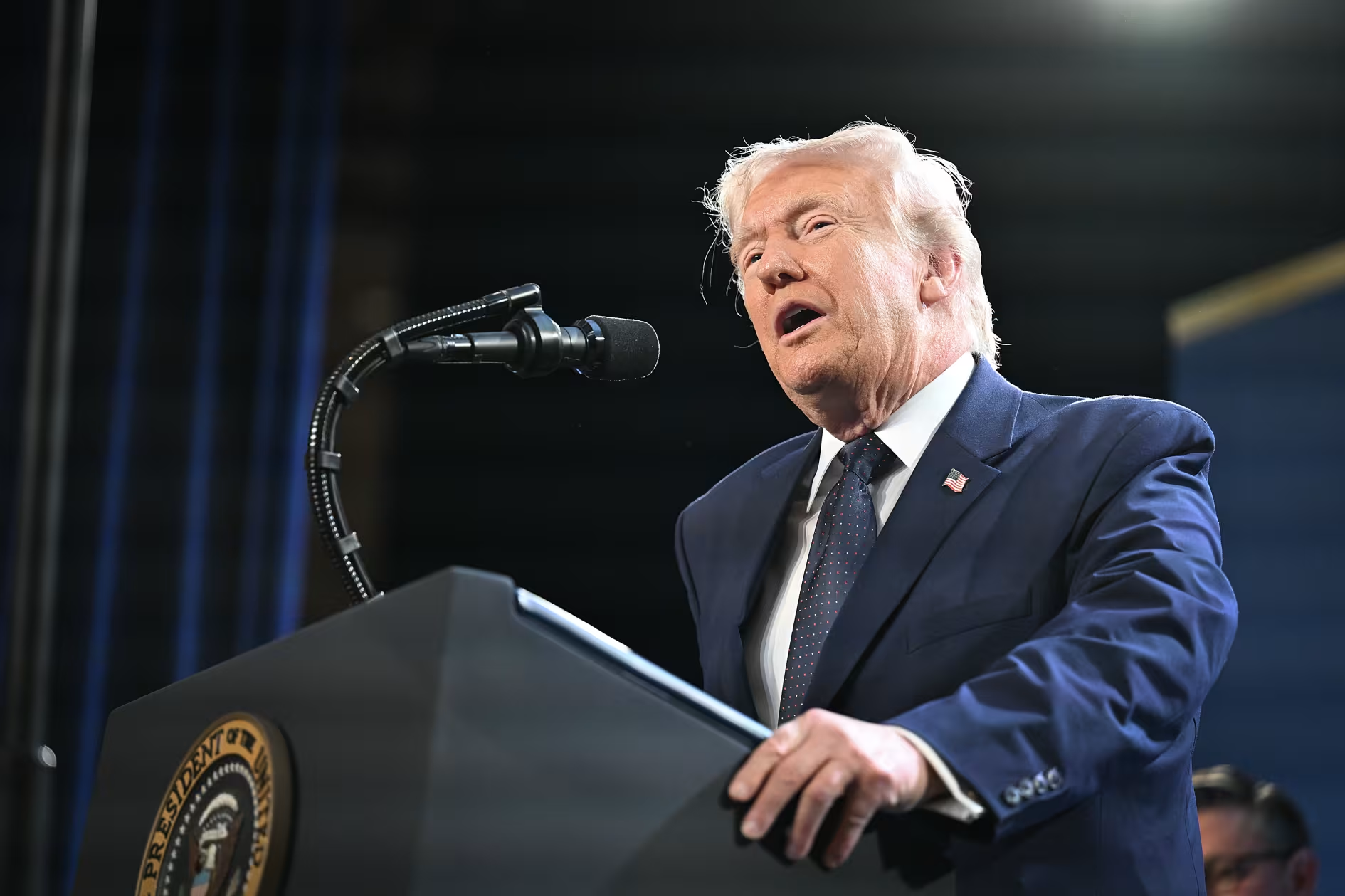
- Trump predicts the Iran war will finish “very soon” and announces the lifting of sanctions to lower oil prices.
- We’ve learned from 50 years of oil price shocks that there are currently just two factors that matter to markets.
- Big Tech stocks are steadily rising, but don’t anticipate a sustained surge.
- YouTube is currently the biggest media corporation in the world, and it continues to grow.
- These five stocks may rise in response to Nvidia’s major GTC event.
- The situation in Iran is unlikely to harm the US economy or increase inflation, but the Fed will take its time lowering interest rates.
- Strait of Hormuz Crisis: Oil Prices & Global Impact
- Iran Conflict Drives U.S. Gas Prices Higher in Spring 2026

Author: starbpo

Over 40% of businesses in the Russell 2000 are losing money. Its price-earnings ratio changes as a result. Compared to the large-cap S&P 500 SPX, the small-cap Russell 2000 RUT trades at a significant discount. Or it sells for a high price. The source of the data determines everything. In actuality, little caps now cost a lot more than large caps. I bring this up to refute the growing argument that smaller stocks are now cheap and should be the focus of bargain seekers because they have dropped so much in recent months. Even while small-cap stocks have lost far…
Fed Chair Jerome Powell stated on Wednesday that the Fed may have to deal with the “challenging scenario” of growing inflation while the US labor market is contracting. The Fed has been granted two objectives by Congress: low unemployment and stable inflation. However, the labor market has been strong since 2021, so the Fed has just had to worry about fighting increased inflation. Powell claimed that President Donald Trump’s tariffs were higher than anticipated during a speech in Chicago on Wednesday. This implies that the economy will be more severely impacted by the consequences of slower growth and greater prices.…
However, GlobalData TS Lombard senior macro strategist Daniel von Ahlen worries that investors may be underestimating the likelihood of a recession. If he is correct, this might cause further suffering later in the year, particularly for stocks. Von Ahlen cited some alarming indicators drawn from recent economic statistics and headlines in a research he shared with MarketWatch on Wednesday. Just as the hiring rate has slowed, federal government employee layoffs will put the labor market’s resilience to the test. Additionally, as income growth has slowed, Trump’s tariffs should increase the cost of numerous goods, reducing consumers’ purchasing power. China’s retaliatory…
Following last week’s shocking selloff in government bonds, which alarmed both investors and the White House, investors have been keeping an eye on the U.S. credit markets for indications of fractures. President Trump retracted some of his April 2 tariffs as longer-dated Treasury yields spiked, but his threats nevertheless prompted China to retaliate, heightening worries of a U.S. recession and concerns about foreign demand for American assets. As credit markets reopen to large firms following a brief lull, the shocks seem to be abating for the time being. However, there are still concerns because it’s unclear how Trump’s tariffs will…
Will investors benefit from the Good Friday respite in this turbulent year? Ahead of this week’s Christian holiday, some people might be wondering that. On Friday, the New York Stock Exchange and the Nasdaq, two significant stock marketplaces, will be closed. Similarly, the bond markets will close early on Thursday at 2 p.m. Eastern, which is also known as Maundy Thursday or Holy Thursday in the Christian calendar. According to data from StockTradersAlmanac.com and @AlmanacTrader, the week leading up to Good Friday has historically been a good one for investors, with the S&P 500 SPX rising 0.9% on average since…
It would be wiser for investors to close their eyes rather than flee when the stock market becomes frightening. The market’s reaction to the White House’s tariff announcements has been particularly erratic. Markets experienced sharp intraday fluctuations as investors attempted to understand the precise nature of economic policy, a sharp decline following President Donald Trump’s announcement of sweeping new tariffs on April 2, and a sharp increase following the announcement of a 90-day suspension on some of those taxes. All of this turmoil highlighted a historical fact about the stock market: the biggest percentage gains and the steepest percentage declines…
Consumer activists warn that dangerous loans and scams reminiscent of the subprime mortgage crisis may resurface as a result of President Donald Trump’s administration’s significant cuts to the federal agency that regulates financial goods like mortgages and student loans. The Consumer Financial Protection Bureau, the country’s leading consumer watchdog established in the wake of the 2008 financial crisis, has seen job losses and a reduction in essential operations under the Trump administration. In addition to initiating enforcement action against businesses that violate the law, the agency is entrusted with safeguarding customers against fraud and dubious lending practices. Although the administration’s…
The data: As developers contend with an unpredictable political landscape, house builders’ confidence increased little in April but stayed in negative territory. In April, sentiment improved mostly as a result of recent declines in mortgage rates. However, overall confidence remained low due to concerns about tariffs and the price of building materials. The industry organization stated on Monday that the National Association of Home Builders’ monthly confidence index increased by 1 point to 40 in April. The index was at 51 a year ago. Because of the tariffs the Trump administration has placed on imported goods, home builders anticipate that…
An unexpected increase in notebook builds could help Intel Corp.’s performance when it releases its earnings next week. Analysts caution against making too much of that, though. This is because, in anticipation of the Trump administration’s planned import duties, Intel (INTC) probably profited in the first quarter from frantic purchases of its PC CPUs. According to Chris Rolland, an analyst at Susquehanna Research, the issue with that is that it might increase risk for the second quarter. According to him, Intel’s first-quarter earnings will be in line, with PC performance being “offset by continued weakness in server.” It’s true that…
According to a recent Senate report, Medicare Advantage’s “secretive maze of marketing and enrollment incentives” costs taxpayers more money and requires reform. More than half of the Medicare market is served by Medicare Advantage, or MA, a private-plan alternative to traditional Medicare. In his report, ranking Democrat on the Senate Finance Committee Sen. Ron Wyden asks for changes to the marketing strategies of MA. In particular, Wyden wants to establish a fixed price for agents and brokers instead of commissions, make them fiduciaries who must operate in the best interests of their clients, and grant the Centers for Medicare &…