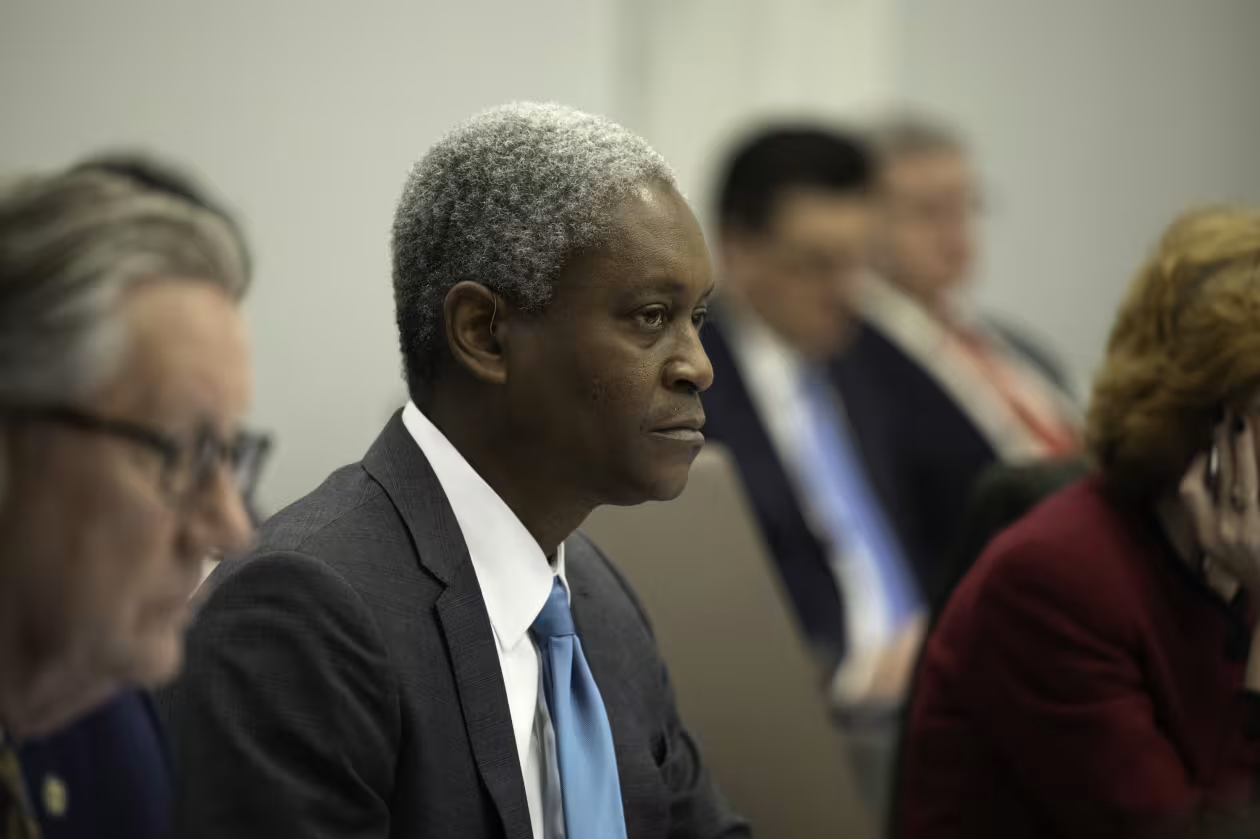
Raphael Bostic, the president of the Atlanta Fed, will step down at the end of February.
Atlanta Fed President Raphael Bostic stated on Tuesday that the Republican tax reform passed this summer is expected to drive up inflation, making it unlikely that the Fed would be able to cut interest rates next year.
Bostic stated in an essay posted on the website of his regional bank and in an interview with reporters that he no longer believed the economy was in risk of experiencing a significant increase in the unemployment rate that could trigger a recession.
According to him, the comeback from the record-long government shutdown and certain stimulative measures in the tax reform should make economic growth higher next year than it was this year.
“A lot of that stuff is about to come through and I think that is going to put some wind under the sails of the economy … and likely to put some upward pressure on inflation,” Bostic stated.
He stated that the Fed will need to keep downward pressure “just to hold the line” on inflation, so “I didn’t pencil in any cuts” for next year.
He noted that earlier concerns about the possibility of a recession have vanished.
Last week, the Fed lowered its benchmark interest rate to a range of 3.5% to 3.75% for the third consecutive meeting.
Bostic stated that he disagreed with the decision to reduce, despite not being a voting member of the Federal Open Market Committee this year.
More concerning than the faltering labor market, he argued, was the possibility of persistently high inflation.
According to him, a lot of businesses predict pricing increases in 2026 due to increased material costs. These price increases are not exclusive to “tariff-focused firms.”
He added that he doesn’t anticipate inflation to fall to the Fed’s 2% objective until 2028. “I do worry we not be too hasty to call the beast slain, but rather stay committed to doing our risk management on price stability to make sure it doesn’t get away from us,” he said.
In November, Bostic made his retirement announcement, stating that he will step down from his position when his tenure ended in February. He was one of numerous officials who broke Fed regulations governing when officials can trade securities, therefore his term was not without controversy.