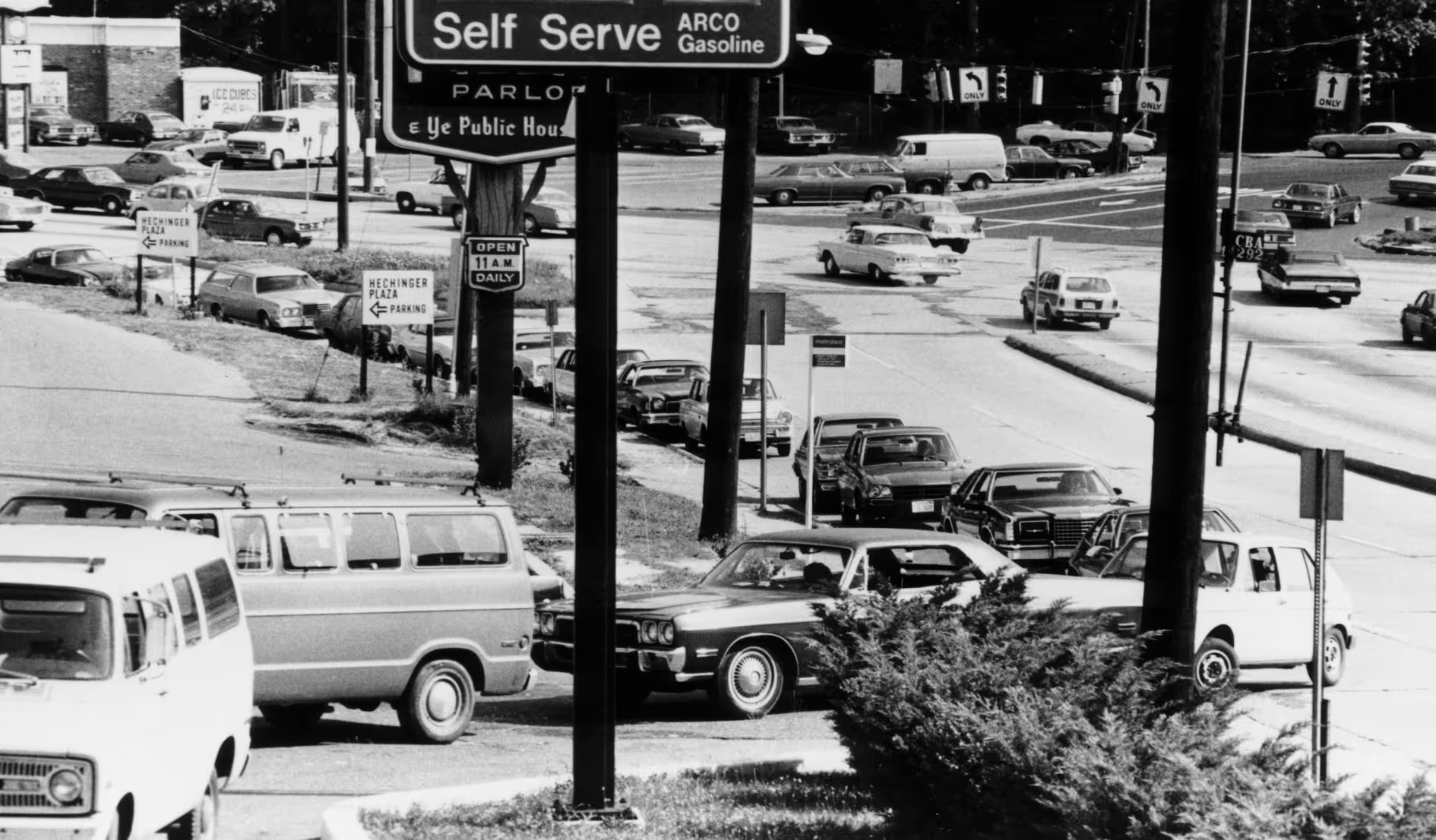
During the stagflation period of the mid-1970s and early 1980s, long queues at gas stations were a typical sight.
The 1970s bogeyman known as stagflation—a time of high inflation and pitiful economic growth—has come back to life as a result of the Iran War.
To what extent is it a threat?
Due to a spike in the price of oil, which is essential to the world economy, the United States is undoubtedly facing another increase in inflation. Economic development might potentially falter if an oil shock lasted long enough.
In the worst case, the Federal Reserve might hike interest rates, the stock market might crash, and borrowing costs might increase.
Recession, to put it briefly. Perhaps even a profound one.According to a research note written by Lisa Shalett, chief investment officer of Morgan Stanley Wealth Management, “the oil shock could destroy demand and dent global growth with potential stagflation implications.” “Each day the war rages, we see a reckoning slowly approaching.”
It is impossible to ignore the dual dangers of slower growth and increased inflation. However, the United States is far from going through a period of true stagflation as it did fifty years ago.During a news conference last week, Federal Reserve Chair Jerome Powell stated, “When we use the term stagflation, I always have to point out that that was a 1970s term at a time when unemployment was in double figures and inflation was really high.” “And that’s not the case right now.”
Not that show from the 1970s
Powell is correct. The 1970s economy was very different from the current one.
A perfect storm of unfavorable events struck the United States fifty years ago, completely upending the country’s economic foundations.
The first catalyst was the sharp rise in oil prices that began in the early 1970s, when the world economy was far more reliant on fossil fuels. In just two years, the rate of inflation in the United States increased from 3.2% in 1972 to 11%.
After nearly ten years of uncontrollably high prices, the rate of inflation finally peaked in 1980 at a record 13.5%.
The economy was severely damaged by soaring inflation and Washington, D.C.’s foolish attempts to manage it. The United States saw three severe recessions in less than ten years, from 1973 to 1982.
Millions of people lost their jobs during the stagflation era, particularly after the Fed raised a crucial interest rate to double digits in an attempt to curb sharply rising prices.
The unemployment rate surged to a post-World War II high of 10.8% in 1982, which was only momentarily surpassed following the coronavirus pandemic six years ago.
Will these conditions recur soon?
Economists claim that the world has drastically changed since the 1970s. For starters, economies have more shock absorbers to lessen the impact and are less reliant on oil.According to Steve Blitz, chief U.S. economist at TS Lombard, stagflation is not possible now. “It’s just not.”