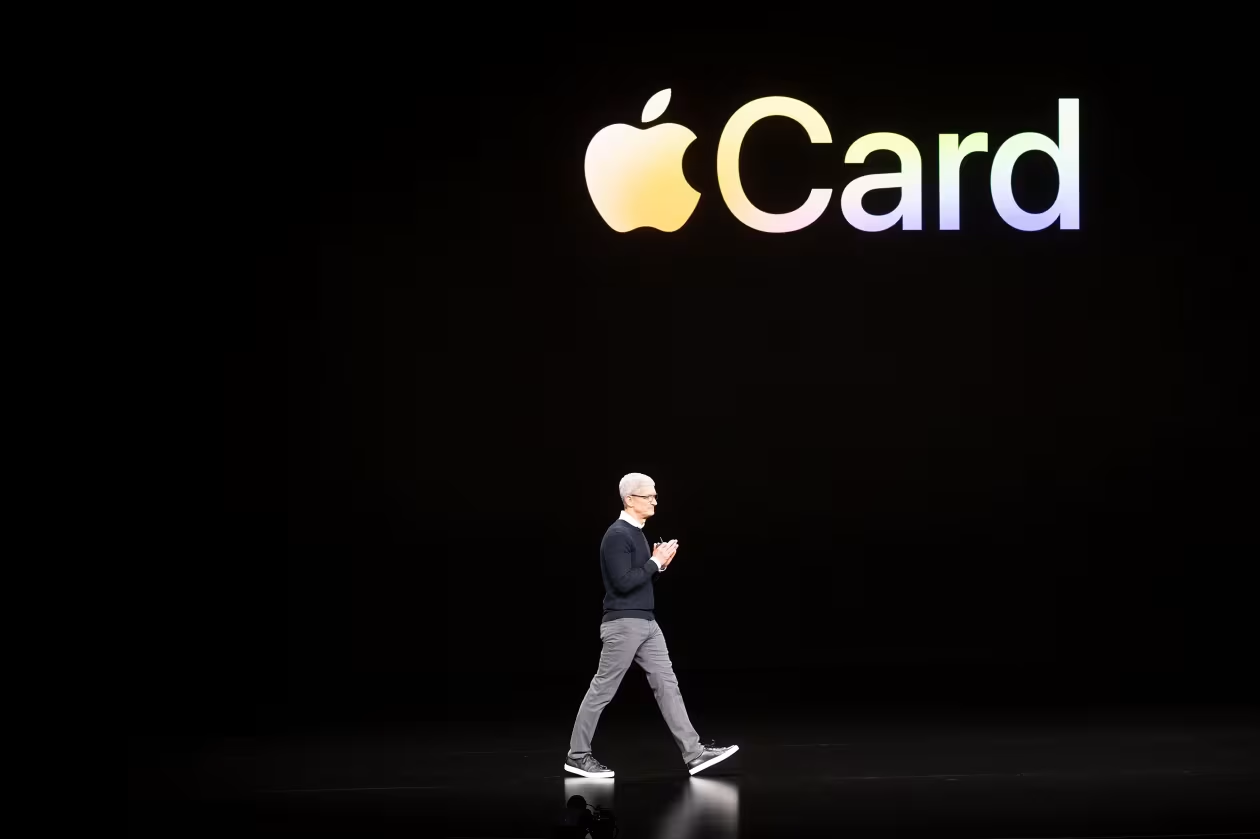
In 2019, Tim Cook revealed the Apple Card.
It appeared to be the ideal combination of high-end brands at first glance. However, Goldman Sachs’ collaboration with Apple on a co-branded credit card wasn’t entirely successful.
At this point, Goldman (GS) has formally withdrawn from the Apple Card program. As previously reported by the Wall Street Journal, Apple (AAPL) and JPMorgan (JPM) stated on Wednesday that they had reached an agreement to take over the card arrangement.
According to Apple and JPMorgan, the changeover should take roughly two years, during which time Apple Cardholders will still be eligible for benefits like high-yield savings accounts and up to 3% cash back on purchases. According to them, Apple Card would continue to use Mastercard (MA) as its payment network.
According to the Journal article, the 2019-launched Apple Card had “a high exposure to subprime borrowers and what has been a higher-than-industry-average delinquency rate, creating the potential for significant losses on the outstanding balances.”
Goldman Sachs was attempting to increase its share of consumer lending through the agreement. However, the study claims that since 2020, the corporation has lost $7 billion on some of its consumer-loan initiatives.
The Journal previously reported in 2023 that Apple required customers to receive their statements at the beginning of each month, defying the industry trend that cardholders do not receive their bills at the same time. This was one of the peculiarities of the Apple Card program that did not quite work out for the Goldman team. Due to the Apple change, Goldman’s support staff had to handle a sudden surge in customer service calls.
The corporations were forced to pay $89 million by the Consumer Finance Protection Bureau in 2024 for “customer-service breakdowns” related to transaction disputes.