Escalating Tensions in the Gulf
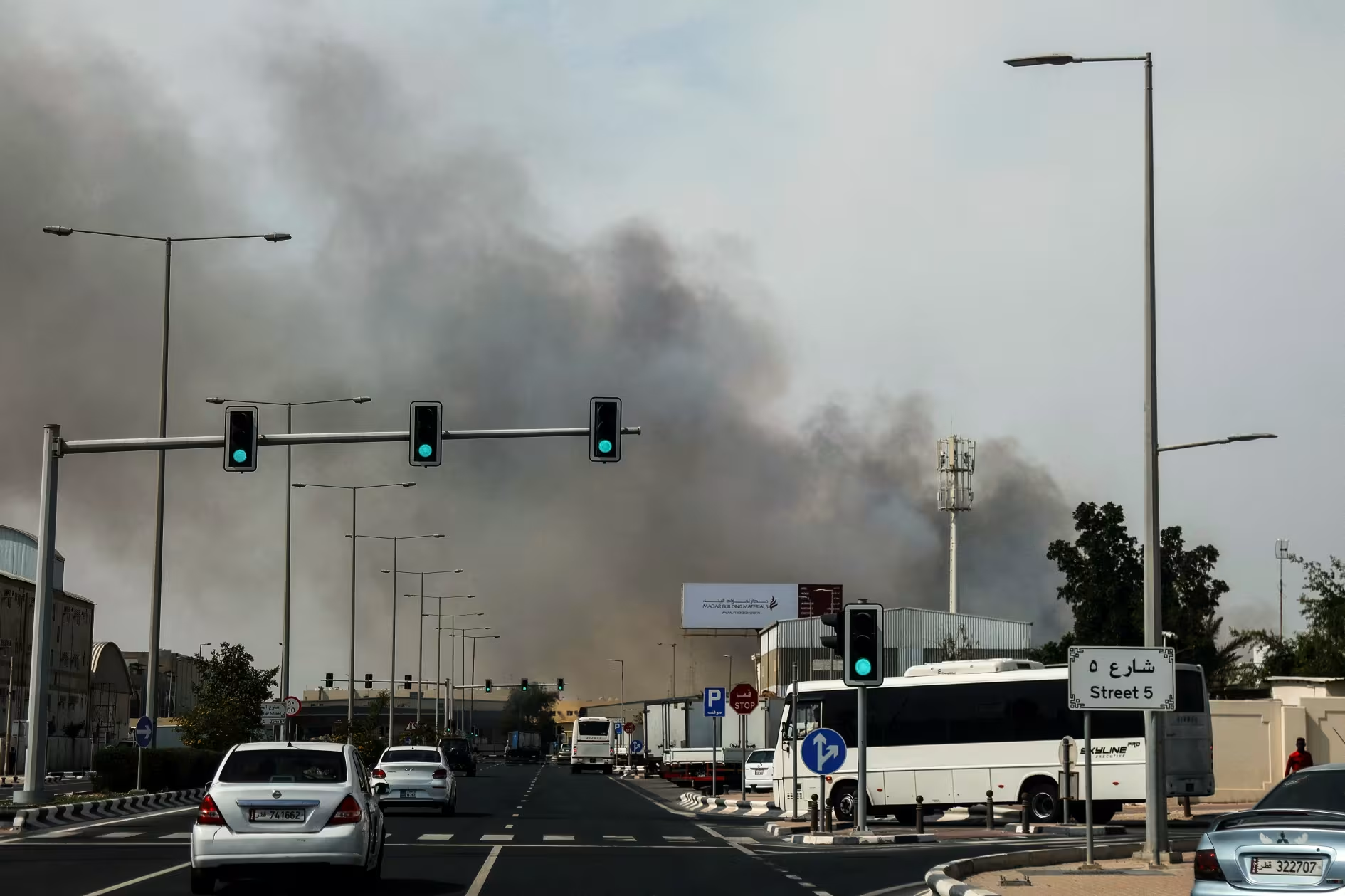
A plume of smoke rises Sunday from the site of a reported Iranian strike in the industrial district of Doha. AFP correspondents and residents reported hearing fresh explosions across the Gulf cities of Dubai, Abu Dhabi, Doha and Manama as Iran pressed its retaliatory campaign.
Market Reactions: Saudi Aramco Shares Surge
Investors anxiously awaiting the resumption of oil trading on Sunday after U.S. and Israeli attacks on Iran might be getting a preview as shares of Saudi Arabia’s $1.6 trillion state-owned oil company surged.
Shares of Saudi Aramco (SA:2222), the world’s biggest oil company and top producer, climbed 3% in Riyadh, where the trading week runs from Sunday through Thursday. The Saudi Arabia All Share Index, though, was down 2%.
Oil Prices Hit Multi-Month Highs
The jump in those shares was a potential precursor of what investors will face later, when oil futures begin trading alongside U.S. equity futures. Oil prices finished Friday at their highest level in roughly seven months as traders grew increasingly wary of a prospective U.S. attack on Iran, which became a reality by Saturday morning.
April West Texas Intermediate crude (CLJ26) rose 2.8% in the week’s final trading session to settle at $67.02 a barrel – its highest finish since Aug. 1. The contract also was up 2.8% for February overall, according to Dow Jones Market Data. Now-expired April Brent crude climbed 2.5% to settle at $72.48 a barrel, the highest point since July 31, gaining 2.5% for the month.
Concerns Over Oil Supply Routes
Talk of $100-a-barrel-oil surfaced almost immediately on Saturday as the attack on Iran by Israel and the U.S., and its repercussions, are seen putting at risk crude oil shipments via the Strait of Hormuz. That maritime chokepoint is crucial for allowing cargo ships to pass from the Persian Gulf to the Gulf of Oman and the Arabian Sea, facilitating the production and export of crude oil from the Middle East. Iran is one of the world’s top crude-oil producers.
Shipping and Insurance Risks Intensify
As some have pointed out on the social media platform X and elsewhere, the Strait of Hormuz is not just for crude oil shipments; fertiliser also traverses the waterway.
On Sunday, Bloomberg reported that oil and gas shipping in the strait had largely come to a halt, with Iran’s Islamic Revolutionary Guard Corps reportedly warning ships that the passageway was not safe. Marine insurance companies have been cancelling policies for ships travelling through the strait, and 50% price hikes are likely in the next few days, the Financial Times reported on Saturday, citing brokers.
Political and Military Escalation
Fresh explosions were heard in Tehran on Sunday, as new attacks on U.S. bases in Dubai and Oman were carried out, as the Revolutionary Guard Corps warned of “devastating” retribution over the killing of Supreme Leader Ayatollah Ali Khamenei in Saturday’s attacks, the Wall Street Journal reported. In a Truth Social media post on Sunday, U.S. President Donald Trump warned that if such retaliation occurs, “we will hit them with a force that has never been seen before!”
Elsewhere, at Sunday’s monthly meeting of eight major oil producers, the Organisation of the Petroleum Exporting Countries and its allies, or OPEC+, voted to raise production by 206,000 barrels per day starting in April, according to a statement.
OPEC+ Response and Production Strategy
The group had been raising production quotas for most of last year but paused for the first quarter of 2026 amid expectations of a global oil-supply surplus.
‘By attempting to draw [Gulf Cooperation Council] nations into the conflict, the [Revolutionary Guard Corps] appears to be provoking countermeasures that could create a pretext for strikes on regional oil installations, a move that would significantly escalate disruption risks.’Ole Hansen, Saxo Bank
The executive director of the International Energy Agency, Fatih Birol, said in a statement on X that the agency was “actively monitoring events in the Middle East & the potential implications for global oil & gas markets and trade flows. Markets have been well supplied to date. I am in contact with Ministers from major producers in the region & IEA governments about the situation.”
Analyst Insights: Potential for Greater Disruption
Strategists are warning that the conflict may be far more impactful on oil supplies than past crises.
“U.S. and Israeli attacks on Iran – met with retaliatory strikes by the IRGC across the region – represent one of the most serious threats to Middle East energy supplies in many years,” Ole Hansen, head of commodity strategy at Saxo Bank, said in a post on X.
“By attempting to draw [Gulf Cooperation Council] nations into the conflict, the [Revolutionary Guard Corps] appears to be provoking countermeasures that could create a pretext for strikes on regional oil installations, a move that would significantly escalate disruption risks,” said Hansen.
“Backed into a corner, they have little to lose and may seek to widen the conflict, thereby increasing pressure on Trump through higher fuel costs at home and the negative economic impact on regional allies,” he said, adding that the impact “could be significant.”
Added a team of strategists at RBC led by Helima Croft in a research note on Saturday: “The ultimate oil price impact of today’s military action will likely hinge on whether the IRGC folds in the face of the aerial onslaught or if it pursues further escalatory actions to appreciably raise the costs of Washington’s second regime change operation [following the U.S. capture in January of Venezuelan leader Nicolás Maduro] in a little over two months.”
The Revolutionary Guard can “potentially still deploy small boats, mines, drones, and missiles to compel insurers and shipping companies to avoid the waterway until the cessation of hostilities,” the RBC strategists said of the vitally important Strait of Hormuz.
And the IRGC may feel that it can force a war of attrition if it assesses that Trump won’t commit ground troops. “It is our understanding that regional leaders warned Washington about the contagion risks of another confrontation with Iran,” and indicated that oil prices of more than $100 a barrel were “a clear and present danger,” the RBC team said.