In terms of growth in TV ratings, ticket sales, and merchandise, the WNBA just finished a season that broke all previous records. The pay for rookies, however, hasn’t changed all that much.
Over the past year, the WNBA’s top rookies’ wages have hardly changed, despite the league’s recent spike in popularity. Caitlin Clark joined the league in 2024 with a salary of $76,535, and the top picks in 2025 will make about the same amount. Additionally, there is a significant pay disparity between the earnings of the rookie women and those of their male counterparts. In contrast, the top choice in the men’s NBA Draft in 2025 will start the season making $12.5 million.
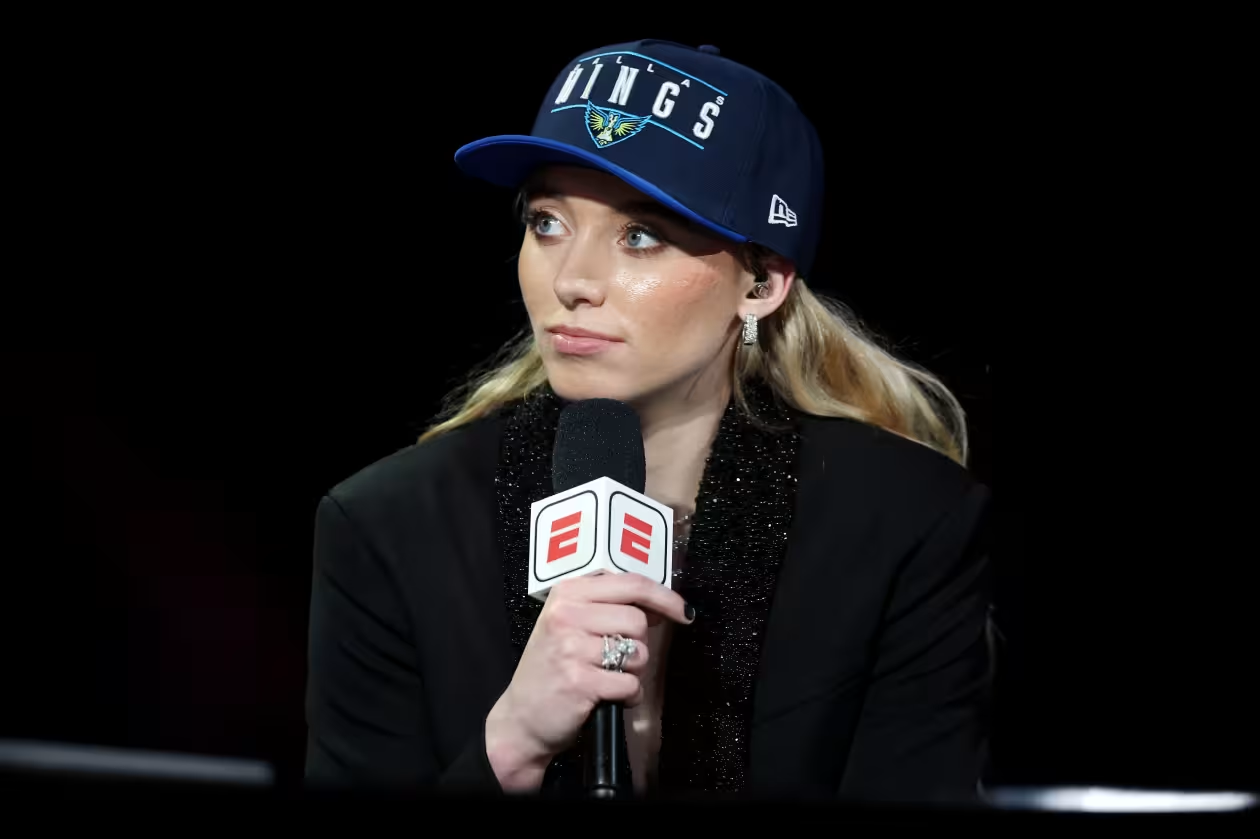
Consider the case of Paige Bueckers of UConn. Her remarkable journey through March Madness, which resulted in a championship and a potential WNBA future, marked the end of her time playing collegiate basketball. The Dallas Wings selected Bueckers with the first overall pick in the April WNBA draft. Hailey Van Lith at No. 11, Dominique Malonga at No. 2, and Sonia Citron at No. 3 were other noteworthy selections.
See: After “retiring her momma,” Angel Reese purchases a home, demonstrating that her income exceeds her $75,000 WNBA salary.
However, these women will not be earning nearly $12.5 million. According to the WNBA’s rookie wage structure, a player’s draft position affects how much she could make on her first contract. Contracts for higher draft picks are more lucrative since they are given larger dollar amounts. Bueckers will therefore receive $78,831 in base pay as a rookie and $348,198 for her first four seasons as the No. 1 choice.
The team has the option to keep the player for years three and four of these contracts, with the first two years guaranteed.
A few WNBA players have openly expressed their displeasure with the poor pay in the league.
“It’s time for WNBA players to get a higher percentage of the league’s basketball-related income,” ESPN broadcaster and former Los Angeles Sparks player Chiney Ogwumike stated towards the end of the previous season in a blog post on the Players Tribune.
Last year, Aliyah Boston, the guard for the Indiana Fever and the 2023 WNBA Rookie of the Year, stated that she would want “multiple commas,” implying a salary of a million dollars.
In October, the WNBA players’ union opted out of their collective bargaining agreement due to a number of reasons, including their discontent with their low pay, particularly following a season in which the league’s popularity increased significantly. The present contract will now finish in September, after the conclusion of the forthcoming season. There may be a work stoppage in the form of a strike or lockout if no new agreement is reached by then.
Players in the WNBA have voiced their desire for increased pay, especially since their percentage pay is far lower than that of athletes in other major sports leagues. For instance, NFL players receive 48% of all league revenue, NHL players receive 50% of league revenue, and NBA players receive between 49% and 51% of league income connected to basketball. However, WNBA players only get 9.3% of the league’s overall earnings. These earnings come from licensing, ticket and retail sales, and broadcast TV deals.
“There’s no reason to think [WNBA] players shouldn’t be thinking 50% belongs to them,” said Andrew Zimbalist, a major authority on sports economics and a professor emeritus of economics at Smith College, in an interview with MarketWatch. “Moving gradually up, there’s no reason why they [WNBA players] shouldn’t be able to get to that level: 50% in the WNBA is not the same as 50% as the NBA, but it makes sense.”
Although Zimbalist acknowledged that “it’s possible” WNBA players might be locked out following the 2025 season, he also suggested that both parties would be “wise” to steer clear of such a distraction and take advantage of the league’s current excellent momentum.
Although it’s unclear if they want a 50/50 share with the league, many WNBA players have publicly acknowledged that revenue-sharing will be a key topic in future negotiations. The WNBA will get at least $200 million annually for 11 seasons under the new broadcast agreement, which is an increase over the previous agreement’s $60 million per season.
While stating that “no one wants” a lockout, WNBA Players Union vice president Napheesa Collier stated that players are “prepared for any possibility right now” in a March appearance on the “We Need to Talk” television program.
Tim Derdenger, an associate professor of marketing and strategy at Carnegie Mellon’s Tepper School of Business, told MarketWatch that the WNBA is “primed for success going forward” because of its explosive rise in ticket sales and TV ratings.
“The league is growing and people are becoming true fans,” Derdenger stated. “I expect that cooler heads will prevail.”
Requests for comment from the WNBPA and WNBA were not answered.
To earn additional money in the interim, several elite athletes are also exploring other leagues. This week, Bueckers signed with the 3-on-3 Unrivaled league, another basketball league, ahead of the April WNBA draft. She has invested in the league as well.
“I mean, investments in women’s sports – I feel like the return on investment has been amazing,” Bueckers stated during her appearance on Good Morning America. The figures were startling even in Unrivaled’s debut year. They simply exaggerated things out of proportion.
Founded in 2023 by WNBA player Breanna Stewart and Collier (from the WNBA Players Union), Unrivaled offers players an average salary of $220,000 and plays its games during the WNBA’s winter. According to Front Office Sports, Bueckers would make $350,000 in her first season in the Unrivaled league—more than she made in her first four years in the WNBA combined.
Along with Bueckers, a number of other elite WNBA players have joined Unrivaled in an attempt to increase their revenue by competing at a high level. Brittney Griner, Sabrina Ionescu, and Angel Reese are a few of those players.
The league “almost broke even,” according to Unrivaled’s president, with $27 million in revenue from its first season, which concluded in March. Derdenger is one of several experts who think that the presence of rival leagues like this could help WNBA players in their labor negotiations.