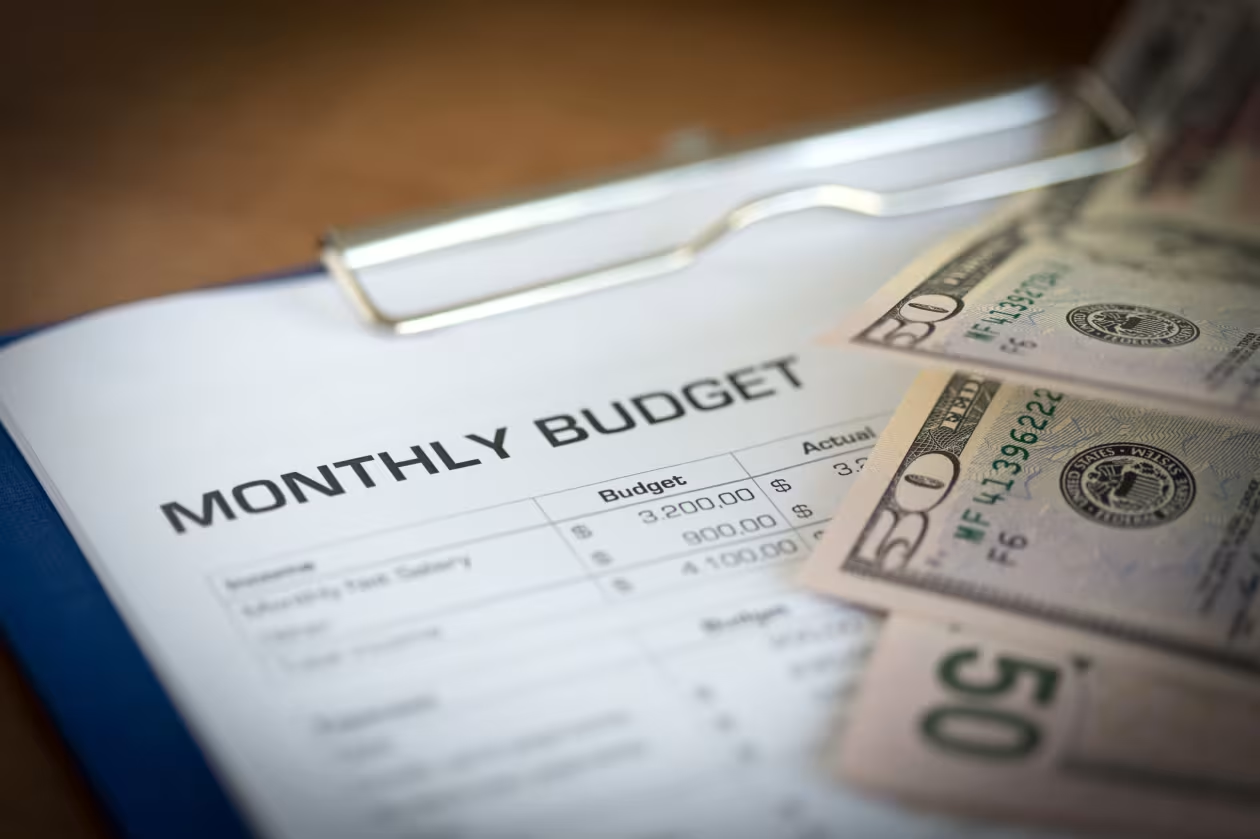
Making a budget improves your relationship with money.
It’s a great opportunity to consider your personal or family budget as the year comes to an end.
There are proper and improper ways to accomplish that.
“Go into the process with an intent to find out what you want to achieve,” advised certified financial advisor Jared Sweeney of Boston. “What are you trying to achieve? It might be boosting your investments or paying off debt. That’s where you start.
At the same time, it’s critical to reflect on the past year and evaluate your performance. Did your estimates of how much you would spend in each category come true? Have you budgeted for unforeseen costs? Have you achieved your financial objectives from the previous year?
“Understand what went well and what didn’t go well, and the reasons you did or did not meet your goals,” Sweeney advised.
Naturally, this presupposes that you established a budget a year ago. “You’re way ahead of the game if you did,” stated certified financial advisor Anora Gaudiano of New York City.
A lot of people disregard budgeting because they find it annoying. Alternatively, people sometimes consider how much they spend and save, which provides them with a general estimate of their cash flow but does not assist them in assessing if they are on track.
These days, mastering the discipline of budgeting is both simpler and more difficult.
The procedure is made easier by the increasing number of budgeting apps available. Monarch and YNAB (You Need a Budget) are two examples. Fundamentally, these applications, whether free or premium, assist you in keeping tabs on your spending and tracking your advancement toward important objectives.
Because money moves through our hands in a variety of ways that might occasionally be challenging to track, budgeting is more challenging. “Fifty years ago, everything ran through your checkbook,” said Sweeney.
Budgeting also becomes challenging since it necessitates a close examination of both the past and the future, anticipating future costs while examining past expenditures.
Budgeting should ideally improve your relationship with money. There is a reason for every dollar that comes in and goes out. You take responsibility for your spending and saving. This, in turn, keeps you from engaging in careless or thoughtless financial activity.
For this reason, a lot of financial advisors advise their customers to approach budgeting as a continuous process rather than a year-end task. “It’s always the right month to budget,” stated Gaudiano. “If you wait till December to do it, then you’re probably spending more money than you should” all year long.
When the economy is facing significant inflation, year-round tracking is particularly helpful. Premiums for house or health insurance that keep rising can be unstable. Predicting grocery bills can be challenging.
Adding a cushion of 5% to 10% to your budget is the greatest way to guard against price increases and unforeseen costs. Many individuals find that challenging, therefore flexibility is crucial. “It’s dynamic when you set a budget,” Sweeney remarked. “It’s not set in stone and you have to shift as you go.”
When creating a household budget, your mindset may be the biggest trap. You’re in trouble if you base your expenditure estimates on what you hope will happen rather than what is likely to happen.
According to John Ryan, a certified financial planner in Charlotte, North Carolina, seasoned budgeters create a baseline by examining their total spending over the previous two or three years. In this manner, there ought to be fewer financial surprises in the upcoming year.
“When people set a budget, it’s often not based on reality,” Ryan stated. “It depends on their desired level of spending. It’s aspirational. After that, individuals revert to their negative behaviors.