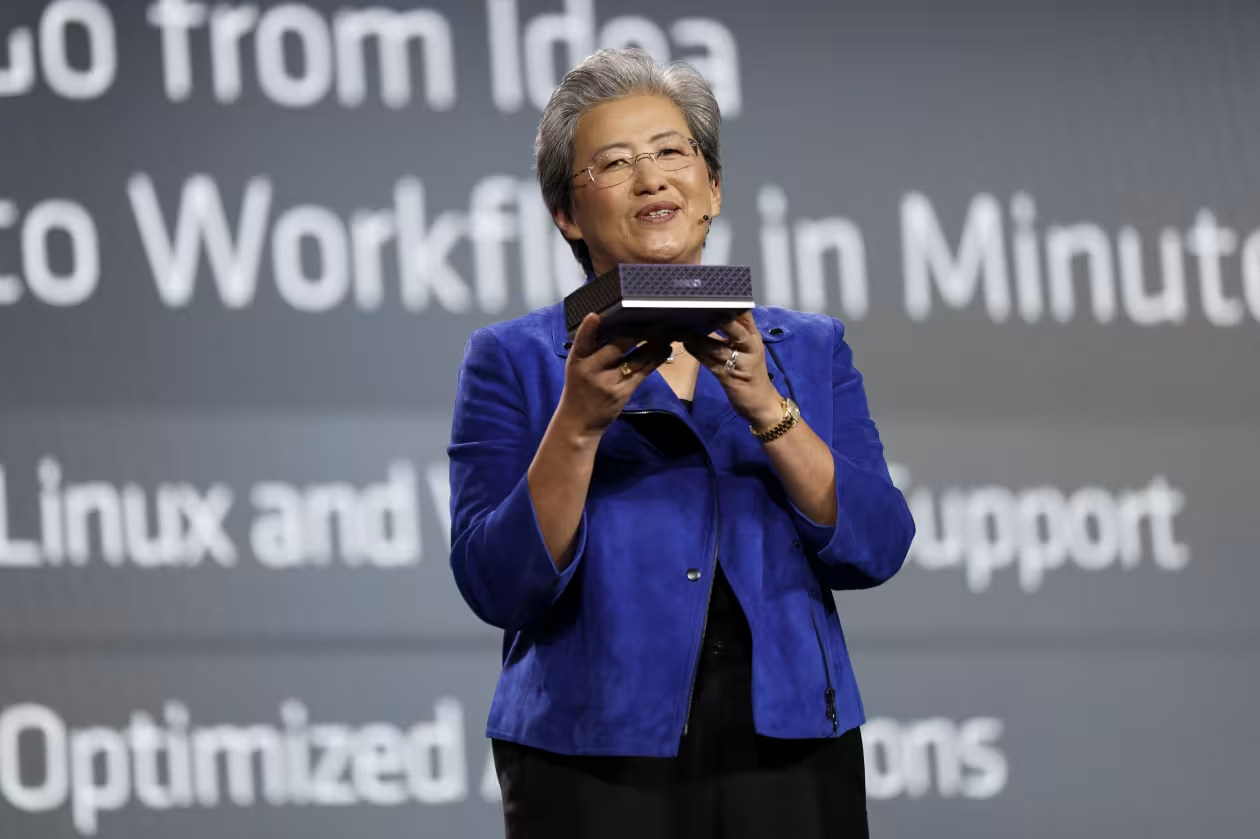
The rising demand for server chips is anticipated to help AMD, which is managed by CEO Lisa Su.
As optimism grows for Advanced Micro Devices’ business of supplying central processing units for artificial intelligence servers, the company’s shares continued to rise into a seventh session.
KeyBanc analyst John Vinh stated that he anticipates a revenue beat and higher guidance when the chip company releases its fourth-quarter earnings results next month, mostly due to the high demand for AMD’s server CPUs, particularly the most recent Turin data-center CPU.
In a note late Tuesday, Vinh stated that AMD (AMD) is almost out of server CPUs for the year and that, as hyperscalers scramble to lock in capacity, the company may increase average sales prices by 10% to 15%. Vinh stated in a note earlier this month that the high demand for AMD’s server chips—which are crucial for AI data centers—could propel the company’s server CPU segment to expand at least 50% this year.
Due in part to a more optimistic assessment of AMD’s server performance, Bernstein analyst Stacy Rasgon raised his revenue projections for the company’s fourth quarter in a note on Wednesday. Additionally, Rasgon projects a 30% increase in sales of AMD’s Epyc processors, which contain the fifth-generation Turin CPU, this year.
On Wednesday, AMD’s stock increased by almost 8%. According to Dow Jones Market Data, the stock recorded gains for seven days in a row, its longest winning run since February 19, 2025.
Vinh claims that despite the surge, Wall Street still has a “mixed” opinion of AMD because it is unclear how competitive its graphics processing units would be in comparison to Nvidia’s.
“Bulls are encouraged by AMD’s progress in competing with [Nvidia] in AI and strong server CPU,” Vinh stated. Conversely, pessimistic investors continue to doubt AMD’s ability to deliver the volume and performance that investors have come to anticipate from its GPUs.
Vinh stated that investors will be watching for comments on the production schedule for AMD’s first rack-scale solution, Helios, and the related Instinct MI455 series of GPUs, as well as updates on the company’s clientele. Vinh noted that the company’s statements regarding the dynamics of supply and demand for its conventional server chips, as well as any revised projections for AI revenue, will also be of interest.
According to Rasgon, AMD “at least” has a deal with OpenAI for its Helios rack that will begin in the second part of this year, but the AI firm is now the only significant client.
Thus, how that collaboration develops and whether AMD can attract other significant clients for Helios will determine “the entire narrative” for AMD’s AI initiatives.
“Nevertheless, given the [OpenAI] ramp starts later this year, there may be less pressure on the near-term AI prospects at least,” Rasgon stated. Rather, he stated that AMD “seems likely to benefit in their core business from server strength and share gains,” and he believes investors would be optimistic while they wait to see how its AI processors perform.